Community Safety
The Lake Street Council is dedicated to supporting Lake Street businesses and serving the public safety needs of Lake Street’s unique and diverse communities. Part of this means ensuring that Lake Street is safe and livable for all the many business owners, employees, customers, and residents who rely on it and call it home.
Watch this video to see three community safety efforts in the Lake Street corridor
HOW WE ARE HELPING
Ways we support community safety on Lake Street:
Advocacy
We engage business and property owners to advocate for local policies that promote safety and livability.
Building Improvement Program
This program offers financial assistance to businesses, non-profits, and property owners to make exterior improvements to commercial buildings, which can enhance visibility and safety.
One-on-One Technical Assistance
Whether you’d like to be more aware of programs & services or want direct connections, our multilingual staff can help your business or nonprofit navigate resources.
Jump to…
Programs & Resources | Graffiti Removal & Mitigation | Safety News & Updates
CONTACT
ZoeAna Martinez, Senior Community Engagement Manager
612-822-1912, zmartinez@lakestreetcouncil.org
Programs & Resources
-
Behavioral crisis response (BCR) is provided free of charge for Minneapolis residents.
The service provides:
Crisis intervention
Counseling
Referrals and connection to support services
These types of crisis include:
Inability to perform daily tasks
Out-of-control mood swings
Loss of touch with reality
Paranoia
You can request BCR if you or someone you know is having a behavioral or mental health crisis:
Emergency: call 911
Non-emergency: call 612-348-2345
-
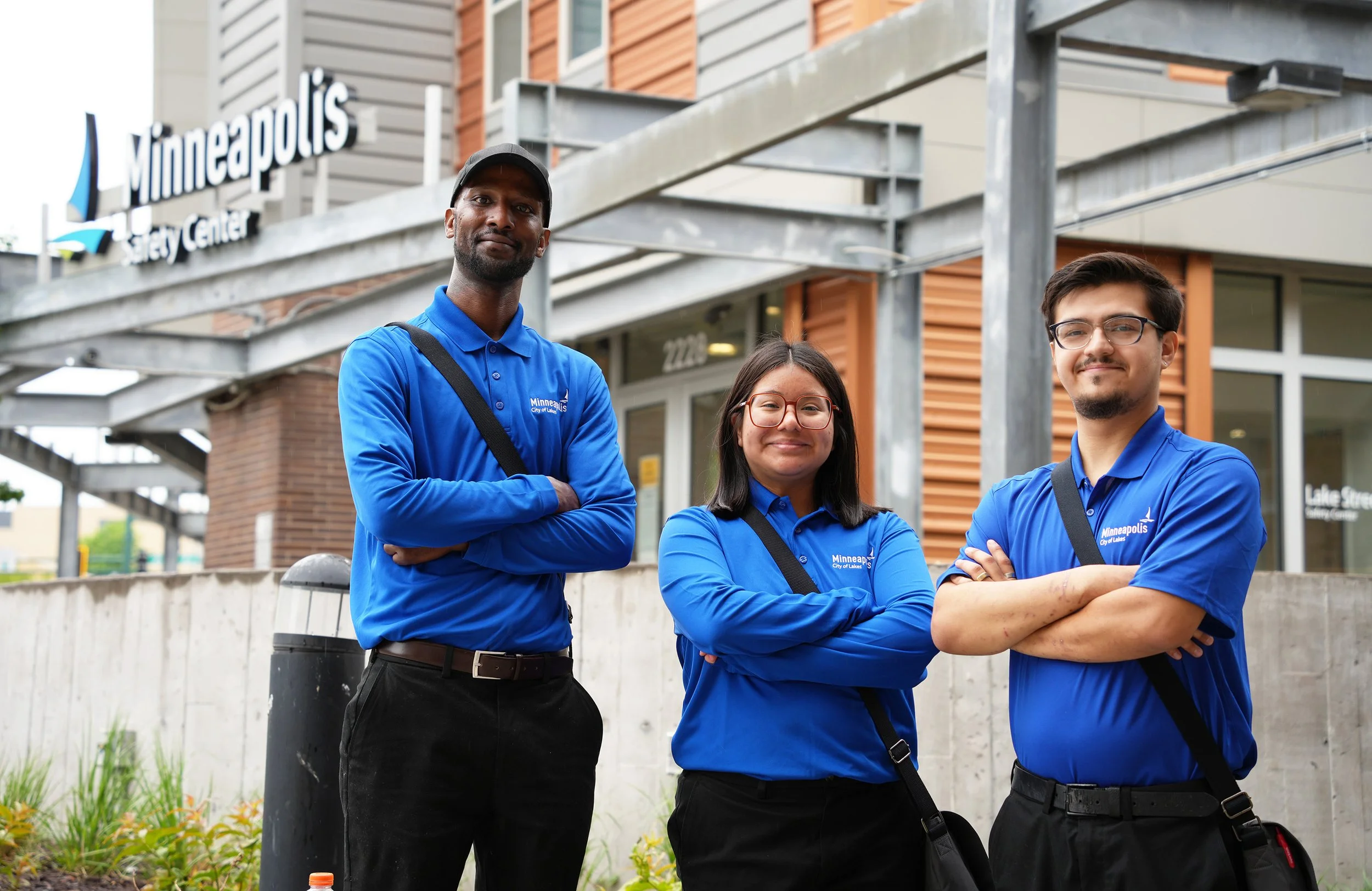
The City of Minneapolis Community Safety Ambassadors are a visible and approachable presence, working directly in the community to assist, engage, and inform those who live, work, and visit the area.
As unarmed, non-law enforcement personnel who reflect the diversity of the community, Ambassadors play a key role in building trust between residents and local authorities, while addressing common livability issues and enhancing the overall sense of security.
They patrol the Lake Street corridor and East Franklin Avenue district five days a week in bright, easily identifiable uniforms.
You can request their services anywhere in the Lake Street corridor by calling or emailing their dispatch center:
Call 612-673 -5392
-
Community Trauma Response (CTR) helps people and communities recover from the effects of violence and trauma.
Their recovery efforts:
Address the root causes of violence
Foster long-term strength and resilience for families and communities
Help people and neighborhoods heal after violence or trauma
Support people as they return to the community after incarceration
Build strong, connected communities through relationships and local investment
People who experience or witness violence often need immediate and ongoing support.
You can contact the City of Minneapolis Neighborhood Safety team about Community Trauma Response:
-
The Minneapolis Homeless Response Team supports residents experiencing homelessness by:
Visiting them wherever they are, five days a week
Connecting them to shelter and services that fit their needs, such as:
Mental health
Social work
Substance abuse support
Working with Hennepin County to provide culturally aware and trauma-informed care
You can contact the Homelessness Response Team by calling or emailing 311:
Call 311
-
The City’s first-ever Mobile Medical Unit (MMU) will offer private, dignified care, providing treatment and resources directly to the community. Expected services include:
Basic health screening
Wound care
Vaccinations
The MMU aims to:
Bridge healthcare access gaps
Reduce barriers in underserved communities
You can contact the Minneapolis Health Department by phone or email and request their presence online:
Phone 612-673-2301
Email health@minneapolismn.gov
-
From July 1 - September 30, 2026, the Clean, Safe, and Active Ambassadors worked throughout Downtown Longfellow to provide daily stewardship of public spaces, build relationships with businesses and community members, and help create a cleaner, safer, and more welcoming commercial district.
-
GMCC (Greater Minneapolis Council of Churches) was founded in 1905 as a faith-based initiative to serve the community. Today, GMCC embraces their legacy through an intercultural, interfaith approach that intentionally welcomes all belief communities in their work.
Healing Circles are an essential part of GMCC’s Drop-in Services program. On Tuesday evenings, from 4:00 - 6:00 pm, all are welcome to join for a free meal, a safe space for relaxing, community-building, & conversation!
You can contact GMCC by email, phone, or in person:
Email info@gmcc.org
Phone 612-276-1500
Office 110 E Lake St, Minneapolis, MN 55407
-
The Streets to Housing team serves single adults, youth, and families in Hennepin County, with trauma-informed, housing-focused services that reduce barriers to housing and identify safe, appropriate alternatives to living outside, including emergency shelter and permanent housing. Streets to Housing can assist with needs including:
Navigating the homeless response system
Getting vital documentation and connecting to benefits as you are eligible
Filling out applications for housing, including Coordinated Entry System (CES) assessments
Making a referral to case managers, including housing-focused case managers
You can request their services anywhere in the Lake Street corridor by calling or emailing their dispatch center:
Email streets.to.housing@hennepin.us
-
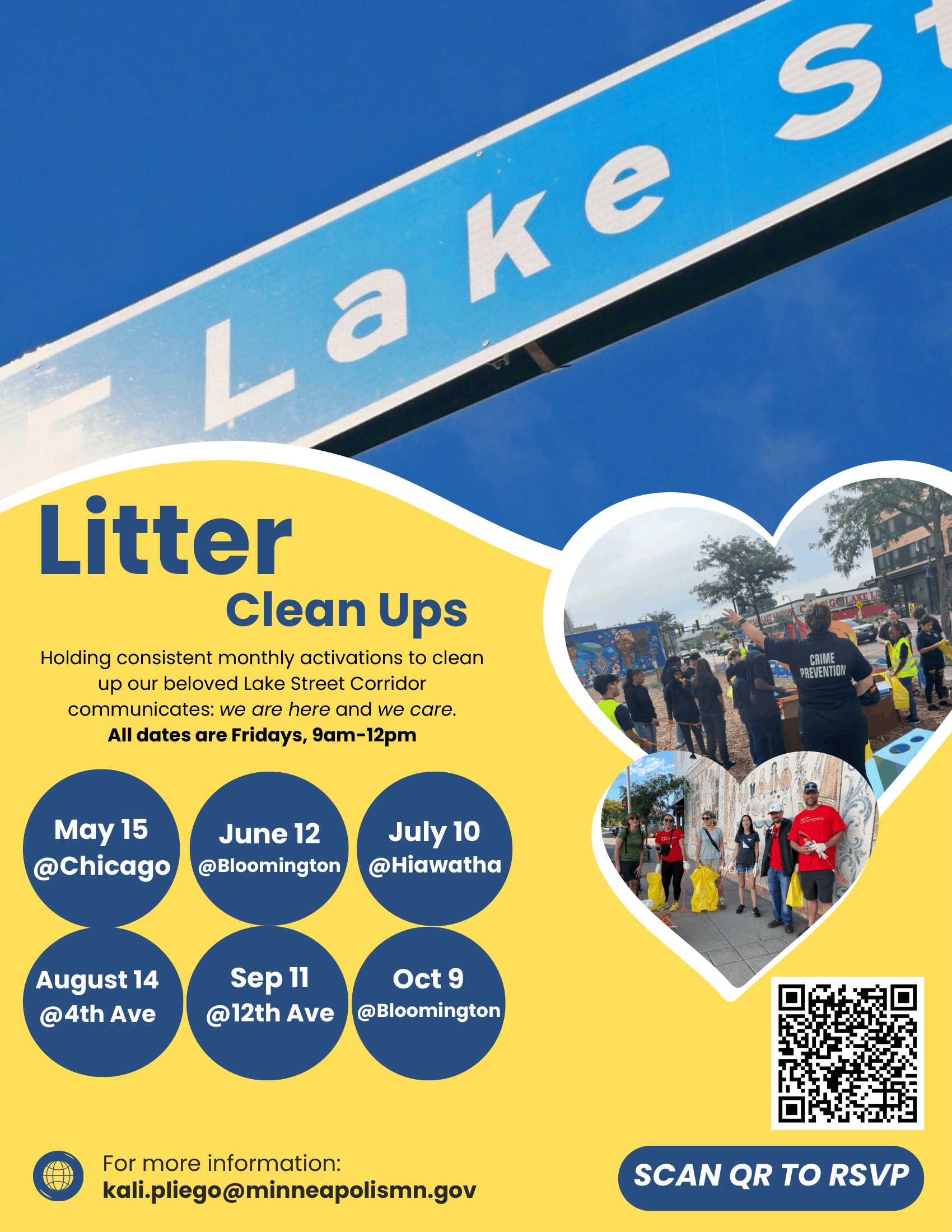
The City of Minneapolis 3rd Precinct Crime Prevention Specialists are holding regular monthly activations to clean up our beloved Lake Street Corridor and communicate: we are here, and we care.
-
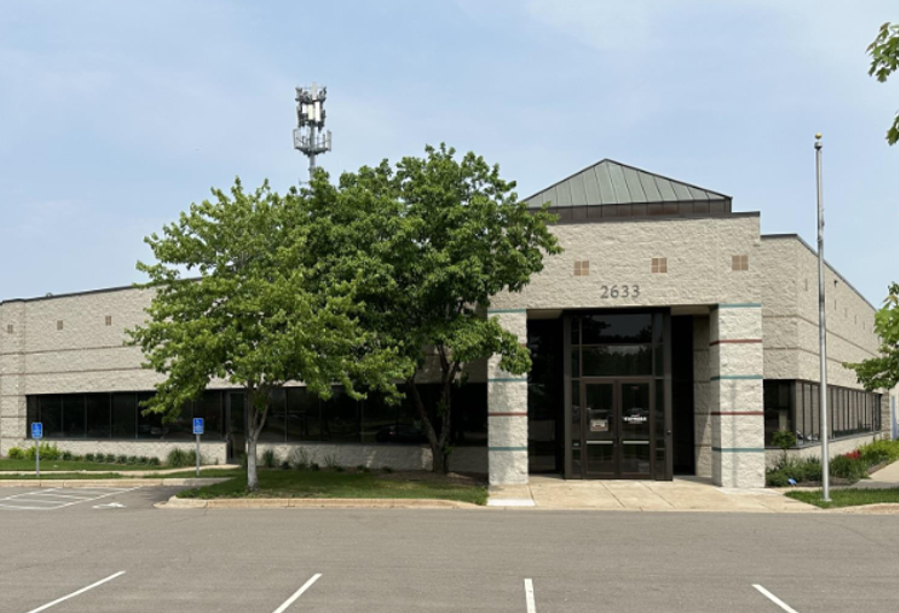
The Lake Street Safety Center will close on Wednesday, October 21st as the pilot project concludes. Learn more
The Lake Street Safety Center is located at 2228 East Lake Street. People and businesses near the area can access City of Minneapolis service providers and resources.
You can visit the Lake Street Safety Center at 2228 East Lake Street, during its open hours:
Monday through Thursday 9:00 am - 5:00 pm
Friday 9:00 am - 4:00 pm
Note: the Safety Center is closed daily 1:00 - 2:00 pm until further notice
-
LEAD Minneapolis (Let Everyone Advance with Dignity) is a collaborative community safety initiative that connects people experiencing challenges related to mental health, substance use, homelessness, or extreme poverty with long-term, community-based care instead of the criminal legal system. Focused on the East Lake Street corridor, LEAD works alongside community partners to improve public health, strengthen neighborhood safety, and advance equity through compassionate, harm-reduction case management.
You can contact LEAD Minneapolis by voicemail and make a referral online:
Voicemail-Only Phone 612-208-7460
-
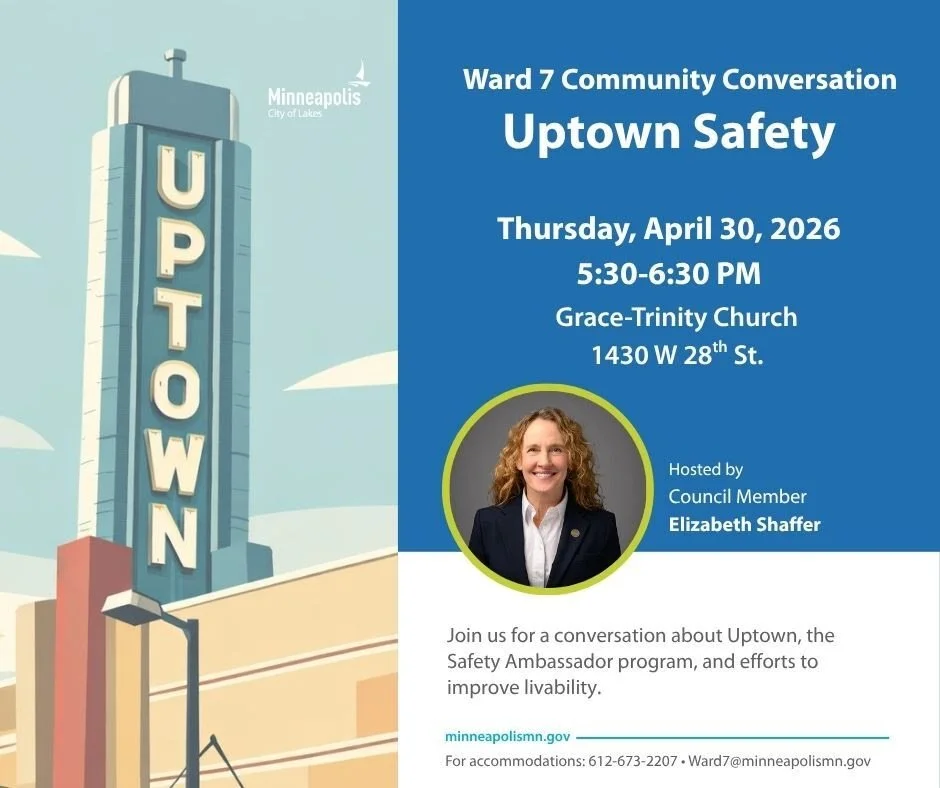
Uptown United is a community-driven initiative focused on strengthening safety, connection, and vitality in the Uptown neighborhood. By bringing together residents, businesses, and community partners, Uptown United supports collaborative solutions that address safety concerns, improve public spaces, and foster a more welcoming environment where everyone feels a sense of belonging.
You can contact Uptown United by email:
-
-
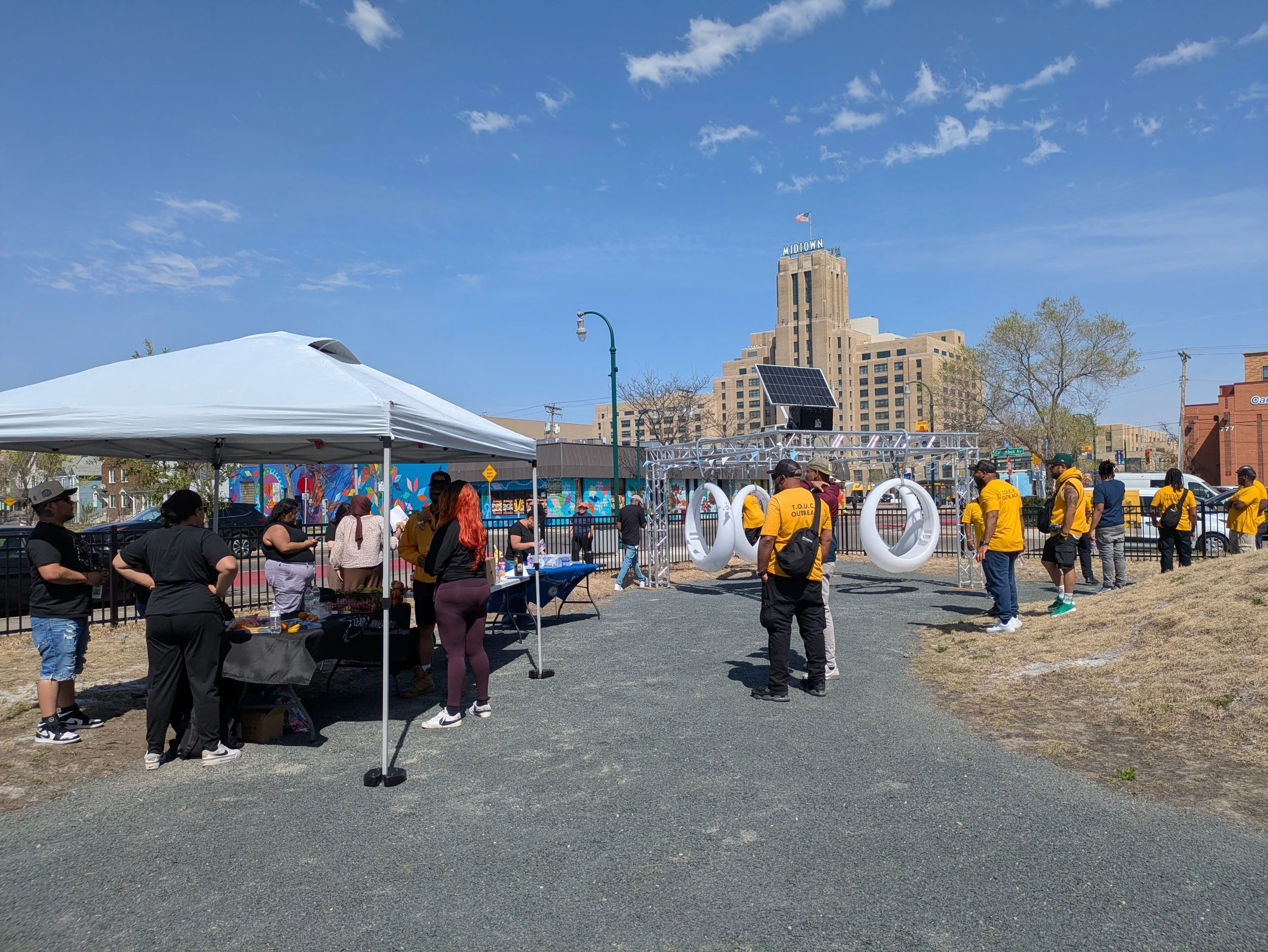
T.O.U.C.H. Outreach (Teaching Our Urban Communities Hope) is a nonprofit dedicated to building safer, healthier communities through outreach, violence prevention, youth mentoring, and community engagement. By fostering trusted relationships, de-escalating conflicts, and connecting individuals with vital resources, T.O.U.C.H. takes a proactive, public health approach to preventing violence and empowering neighborhoods to thrive.
You can contact T.O.U.C.H. Outreach by email, phone, or in person:
Email moe@touchoutreach.org
Phone 612-367-4414
Office 2222 East Lake Street, Minneapolis, MN, 55407
Graffiti Removal & Mitigation
Watch this video to see how murals act as graffiti mitigation in the Lake Street corridor
Graffiti and tagging negatively impacts the Lake Street community. Businesses and property owners are burdened with the costs to clean up graffiti and repair damages. The presence of graffiti and excessive tagging can also make a building appear neglected which creates negative impressions and reduces sense of comfort.
If graffiti is present on public property, contact 311:
Call 311
The sooner graffiti is removed, the easier the process will be. The recommendations on graffiti removal are dependent on the tagged surface:
If the graffitied surface is not painted…
Use the free graffiti-removal solvent, available at all fire stations in Minneapolis. Make sure to use with caution and as instructed.
If the graffitied surface is painted…
Paint over the graffiti to minimize damage to the paint underneath.
Make sure the new paint color is very close to the original, and cover graffiti with a large rectangle of paint, then blend the edges.
Paint dries best in dry, warm weather. If you need to paint over graffiti in winter, make sure to choose an exterior paint suitable for lower temperatures.
If the gratified surface is glass…
A razor blade scraper can take off dried paint from windows and glass surfaces.
If a razor blade scraper is insufficient, use the free graffiti-removal solvent, available at all fire stations in Minneapolis. Make sure to use with caution and as instructed.
There are tactics you can take to mitigate graffiti:
Anti-graffiti coating: clear, protective sealers applied to surfaces that make graffiti easier to remove, which helps minimize damage and discourage repeat vandalism
Ivy or vines: flat, blank walls can be seen as a “blank canvas” by one looking to paint graffiti. Planting ivy or installing artificial vines covers flat, blank surfaces that are vulnerable to tagging
Lighting: illuminating dark or poorly visible areas can deter graffiti and other acts of vandalism
Murals: flat, blank walls can be seen as a “blank canvas” by one looking to paint graffiti. Installing a mural or mosaic on these walls can discourage graffiti.
Safety News & Updates